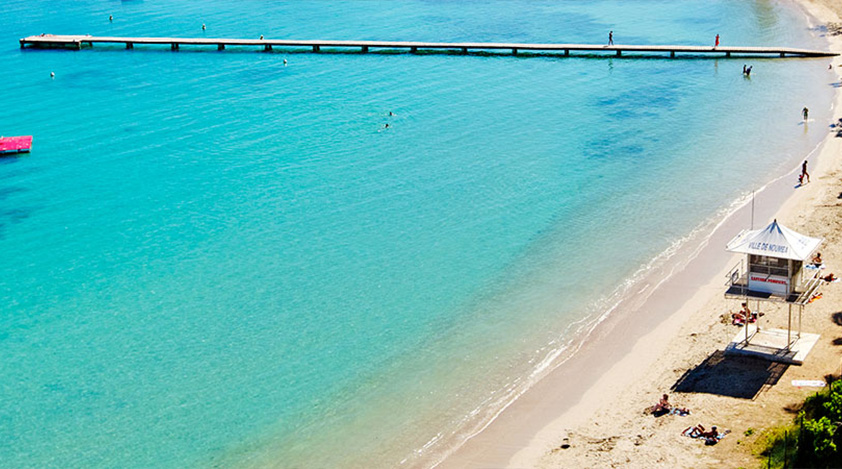
Often called the island closest to paradise, the Isle of Pines blends white sand beaches, luminous lagoons, towering pines and cultural treasures that stretch back generations. Travellers come for the scenery yet return with a deep connection to the island’s people, traditions and stories. Whether you are exploring by land, water or air, the Isle of Pines offers a remarkable mix of natural beauty and cultural depth within one of the most spectacular regions of the South Pacific.
Below are some fun facts to inspire your journey.
Fun Facts About the Isle of Pines
- The Isle of Pines is famous for its towering Araucaria pines, which can grow up to 60 metres tall. These ancient trees are found in only a few places in the world and give the island its distinctive, almost otherworldly skyline.
- The lagoon surrounding the island forms part of the New Caledonia Barrier Reef, a UNESCO-listed ecosystem recognised for its extraordinary marine biodiversity, including coral species, turtles and reef fish.
- Traditional outrigger canoe journeys across Upi Bay follow ancestral Melanesian navigation techniques passed down through generations and still practised by local communities today.
- Local legend says the Grotto of Queen Hortense sheltered a young Kanak princess for more than a year during a period of tribal conflict, giving the site both historical and cultural significance.
- The Isle of Pines is known for some of the clearest waters in the South Pacific. On calm days, travellers can often spot turtles, rays and colourful reef fish from the shoreline, without even entering the water.
Exploring Isle of Pines by Water
Most travellers are drawn first to the luminous lagoon that surrounds the island. With sheltered reefs, calm bays and hidden channels, exploring the Isle of Pines by water offers some of the most memorable experiences in New Caledonia.
Kanumera Bay
Kanumera Bay is one of the island’s most cherished natural sites. Emerging just offshore is the Sacred Rock, a striking limestone formation linked to local legend. Visitors cannot climb it due to its cultural significance, yet swimming around the rock is encouraged and reveals a thriving underwater world. Calm water makes the bay ideal for snorkelling, and the narrow sandbank connecting the rock to the mainland offers scenic walks with unmatched views.
La Piscine Naturelle (Natural Pool)
Located near Oro Bay, the Natural Pool is one of the most extraordinary swimming spots on the island. Enclosed by reefs and framed by tall pines, the pool is shallow enough in parts for snorkellers to observe colourful fish from the surface. Visitors typically arrive by following a short forest trail or by embarking on a traditional outrigger canoe trip across Upi Bay before walking through shaded woodland to reach the pool. Both routes offer spectacular views and gentle island immersion.
Upi Bay
Upi Bay is famous for its traditional Melanesian outrigger canoes that glide along still turquoise waters. The bay is dotted with large coral formations that rise above the surface, creating an otherworldly landscape. Many travellers describe this experience as stepping into a natural cathedral shaped by water and stone. Turtles and dolphins occasionally appear alongside the canoes, adding magic to the journey.
Nokanhui and Moro Islets
Few sights compare to drifting ashore at Nokanhui, a slender sandbank rising from the centre of the lagoon. Its bright white sand and luminous water offer postcard views in every direction. Snorkelling conditions here are exceptional, with reefs only a short swim offshore. Most tours combine Nokanhui with neighbouring Moro Islet, where guests often enjoy a traditional island lunch featuring fresh seafood grilled on the beach.
Discovering Isle of Pines by Land
Travelling inland reveals the heart of island culture and history. Land-based tours provide a rich understanding of the island’s heritage while showcasing landscapes shaped by both people and nature.
Statue of St Maurice
Situated in Vao, the Statue of St Maurice commemorates the arrival of the island’s first missionaries. Surrounding totems carved with birds and animals create a vivid representation of how Christian and traditional beliefs coexist on the island. The site is significant for understanding how different cultural threads have shaped the Isle of Pines over time.
Notre-Dame de l’Assomption
Also located in Vao, Notre-Dame de l’Assomption is a historic church built by convicts in the 1960s using local timbers and stone. Its interior features coral decorations, carved saints and colourful tropical flowers. Daily use by the local community gives the church a warm atmosphere, and many travellers find it a peaceful stop during a day tour.
Grotto of Queen Hortense
Hidden beneath dense vegetation, the Grotto of Queen Hortense is linked to the story of the young princess who sheltered here during a period of tribal conflict in the mid-1800s. The cave features dramatic stalagmites and a quiet, reflective atmosphere. Local guides often recount the legend of Queen Hortense, adding cultural depth to the visit.
Convict Prison Ruins and Cemetery of the Deported
Near Wero village lie the stone foundations of the convict prison ruins, which once housed thousands of French deportees from the Paris Commune. The site is now overgrown, yet its arches and walls hint at the island’s complex colonial history. A short walk leads to the Cemetery of the Deported, where 230 unmarked graves serve as a poignant reminder of the island’s past.
N’Ga Peak
Rising 262 metres above sea level, N’Ga Peak offers a rewarding hike suitable for most fitness levels. The one-hour ascent leads to sweeping views of the lagoon, pine forests and surrounding islets. Clear days offer some of the best panoramas in New Caledonia, making N’Ga Peak a favourite for walkers and photographers.
"The view from N’Ga Peak felt endless. It was the first time I understood why this island is compared to paradise." – Liam M., 2022
Seeing Isle of Pines by Air
For an unforgettable perspective, exploring the Isle of Pines by air reveals the full expanse of its turquoise lagoon, coral bommies and contrasting pine forest. Helicopter tours typically depart from Magenta Domestic Airport and trace a route over Kuto Bay, Nokanhui Atoll, Oro Bay and Gadji Bay.
Some flights include a circuit over Yate Lake and Madeleine Falls before returning to Noumea, offering an even broader view of New Caledonia’s landscapes. The months of July and August provide the best chance of spotting whales migrating through nearby waters.
Expert Travel Tips
- New Caledonia enjoys a temperate, sunny climate all year round. Don’t worry, you’ll make the most of your trip to New Caledonia, whatever the season. However, the dry period in October and November promises exceptionally sunny weather and pleasant temperatures without excessive heat.
- Reef shoes are strongly recommended when exploring shallow coral areas such as the Natural Pool. They provide protection from sharp coral and uneven surfaces while helping you move comfortably in and out of the water.
- Many traditional and natural sites are located on customary land and may require permission to enter. Always follow local guidance, respect signage and observe cultural protocols when visiting villages or sacred areas.
- Flights and boat transfers to the island can be limited, particularly during peak travel periods and local holidays. Booking transport and tours early helps secure preferred travel times and avoids last-minute changes.
- Carry cash for small entry fees at natural attractions and village run sites. These contributions often support local communities and the ongoing care of the island’s environment and cultural heritage.
Plan Your South Pacific Escape
The Isle of Pines is the perfect blend of natural beauty and cultural depth. Whether you are tracing coral reefs, walking forested trails or discovering the island’s stories, the experience feels both peaceful and enriching.
Plan your trip today and explore our curated South Pacific holiday packages to discover the wonders of this remarkable region.