Copenhagen is one of Scandinavia’s most charming capitals, blending centuries of history with a relaxed coastal atmosphere that many travellers find irresistible. From grand palaces to leafy parks, colourful harbours and cosy cafés, the city delivers a wonderfully balanced mix of culture, nature and everyday hygge. If you are planning a holiday in Northern Europe, Copenhagen is an excellent place to begin your Scandinavian adventure.
Below, we explore some of the most enchanting places to visit in Copenhagen, Denmark, along with fun facts, expert travel tips and insider insights to help you make the most of your journey.
Fun Facts About Copenhagen
- Tivoli Gardens is one of the world’s oldest operating amusement parks, opening in 1843. Its blend of historic rides, gardens and evening lights continues to inspire theme parks around the world.
- Renowned author Hans Christian Andersen lived near Nyhavn, where the colourful waterfront is said to have inspired several of his famous fairy tales.
- Copenhagen has set an ambitious goal to become the world’s first carbon-neutral capital. The city invests heavily in renewable energy, green transport and sustainable urban design.
- Cycling is a way of life in Copenhagen, with more bicycles than cars on the road. Dedicated bike lanes crisscross the city, making cycling one of the fastest and most popular ways to get around.
- Many of Copenhagen’s palaces, parks and formal gardens were originally designed as summer retreats for Danish royalty. Today, these former royal spaces are open to the public and contribute to the city’s relaxed, liveable atmosphere.
Nyhavn
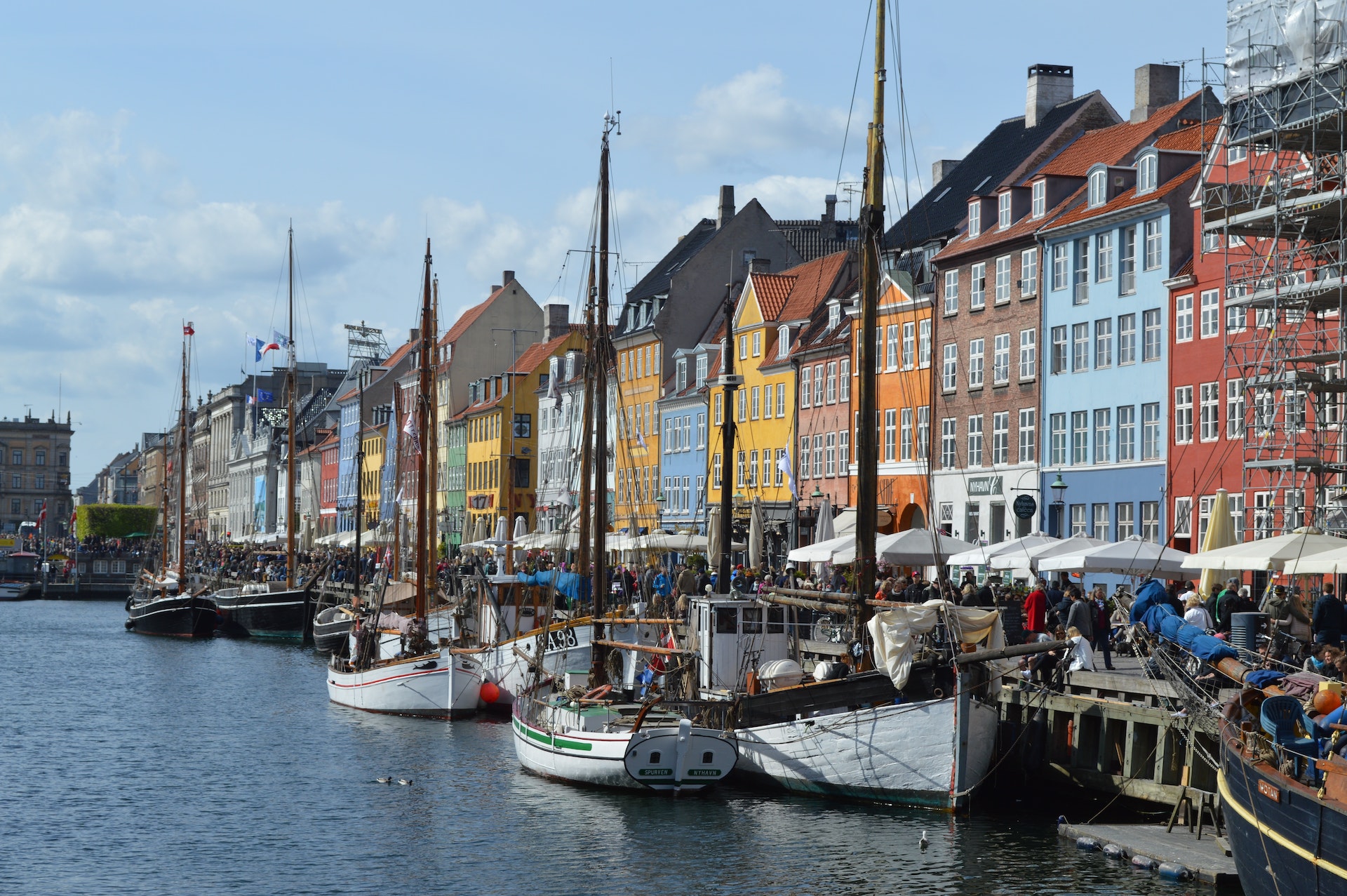
Nyhavn is the postcard image most travellers associate with Copenhagen. This 17th-century harbour is lined with brightly coloured townhouses, wooden ships and quayside cafés that stay lively throughout the day. Once a bustling commercial port, it has transformed into one of the most atmospheric places to visit in Denmark.
Wander along the cobblestone promenade, admire the historic façades and take in the waterfront views that inspired Danish artists and writers, including Hans Christian Andersen who lived in several houses along the canal. From Nyhavn, you can also join scenic canal tours that glide past Copenhagen’s bridges, waterways and historic districts.
The Little Mermaid
Sitting quietly on a rock along the Langelinie promenade, The Little Mermaid is one of Copenhagen’s most iconic symbols. Installed in 1913 to honour Andersen’s fairy tale, the sculpture is smaller than many expect yet full of expression. Her wistful gaze toward the sea captures themes of longing and transformation that define the original story.
Most visitors take a peaceful waterfront walk from Nyhavn to reach the statue. The promenade is lined with parklands and open views of the harbour, making it a scenic stop during your city explorations.
Rosenborg Castle and the King’s Garden
Rosenborg Castle is a captivating reminder of Denmark’s royal past. Built in the early 1600s as King Christian IV’s summer residence, the castle stands among wide lawns, ancient trees and rose gardens known collectively as the King’s Garden.
Inside, Rosenborg houses Denmark’s Crown Jewels and royal regalia. Highlights include the Knights’ Hall with its silver lions and ornate thrones. Outside, the gardens offer a peaceful escape from the city, especially in spring, when flowers bloom along the palace walls.
Tivoli Gardens
Just across from Copenhagen Central Station lies one of the world’s most beloved amusement parks. Tivoli Gardens opened in 1843 and still enchants visitors with its whimsical mix of gardens, lakes and classical architecture, accompanied by amusement rides, theatres and seasonal events.
Families enjoy vintage carousels and Ferris wheel,s while thrill seekers can try high-speed coasters. As night falls, Tivoli transforms into a glowing wonderland illuminated by lanterns and lights. The park’s theatre and concert programmes add to its cultural charm, making it a must-see attraction for all ages.
Frederiksberg Palace
Set atop a gentle hill overlooking its expansive baroque garden, Frederiksberg Palace exudes elegance and serenity. Although the palace now serves as the Royal Danish Military Academy, visitors can explore the surrounding landscaped grounds, which are among the most beautiful parks in Copenhagen.
Wide lawns, lakes, bridges and walking paths create a restful environment perfect for slow morning strolls or picnics under the trees. From certain viewpoints, you can see the palace façade reflected in the water, creating a picture-perfect scene.
Church of Our Saviour
One of Copenhagen’s architectural triumphs, the Church of Our Saviour is famed for its black-and-gold spiral tower. Visitors can climb the 400 steps that wind inside and then outside the spire for one of the best panoramic views in the city. On a clear day, you may even see the coastline of Sweden across the water.
Inside the church, intricate woodwork, historic organs and baroque details showcase Denmark’s religious artistry. It is a rewarding stop for travellers who enjoy heritage buildings and viewpoints.
The Botanical Garden
Part of the University of Copenhagen, the Botanical Garden is a lush oasis filled with over 13,000 plant species. Its paths lead through themed gardens, ponds and greenhouses including the renowned Palm House, a Victorian glass structure built in 1874.
Inside the Palm House’s metal spiral staircase, you can rise above the treetops of tropical plants while the warm, humid air mirrors the climate of faraway jungles. Outside, seasonal blooms create a peaceful sanctuary ideal for slow wandering.
Expert Travel Tips
- Visit Copenhagen between May and September for mild temperatures and long daylight hours. Summer brings outdoor dining, festivals and extended museum hours, while late spring and early autumn are slightly quieter but still pleasant.
- Purchase a Copenhagen Card if you plan to sightsee extensively. It provides unlimited public transport and entry to many major attractions, making it both convenient and cost-effective for short stays.
- Join walking or cycling tours to explore neighbourhoods beyond the city centre. Areas such as Nørrebro, Vesterbro and Christianshavn offer insight into local life, design culture and Copenhagen’s evolving food scene.
- Many museums and cultural institutions offer free entry on specific days or evenings. Checking schedules in advance can help you plan visits around these opportunities and manage your travel budget.
- Cafés and restaurants fill up quickly during peak months, especially on weekends and at popular brunch spots. Booking ahead is recommended, particularly if you want to dine at well-known or Michelin-recognised venues.
Begin your scandinavian JOurney
If Copenhagen has captured your imagination, it is often just the starting point. Beyond Denmark, Scandinavia opens up into fjords, forests, archipelagos and cities shaped by design, history and a strong connection to nature. The region offers a rewarding balance of cultural experiences and outdoor exploration, all connected by efficient transport and a shared Nordic identity.
Explore Entire Travel Group’s Scandinavian travel packages and plan a Northern Europe journey that combines iconic cities with nature, culture and well-paced travel tailored to your interests.